Build a flexible integration capability around your needs. Meet Swedwise at Nordic APIs Summit.

APIs, business-critical messaging, data transformation, monitoring and AI all place different demands on your integration landscape. See how Swedwise brings the right capabilities together to create secure, flexible information flows that can evolve with your business.

Modern integration is no longer one type of job. An API that makes data available to new services has different requirements from a high-volume B2B flow. Transforming partner data presents another challenge. And as the integration landscape grows, organisations also need to understand what is happening across their flows, what depends on what, and how new technologies such as AI fit into the picture.
At its core, system integration is about getting the right information to the right system, at the right time — securely and traceably. Done well, it creates a foundation for greater efficiency, faster change and continued business development.
Some organisations need a reusable API layer that can support many applications and teams. Others have business-critical messages that simply cannot be allowed to disappear. Complex partner formats may need transformation before another system can use them. And once several platforms and technologies are involved, end-to-end visibility becomes essential.
The right architecture may therefore centre around a broad integration platform, specialist capabilities for particular requirements, or several technologies working together.
What matters is starting with the need: what information needs to move, how critical it is, who needs to use it and how the environment needs to develop over time. Different capabilities solve different parts of the integration challenge — and together they can form one connected integration capability.
Organisations are connecting more applications than ever — across cloud, on-premises and partner environments — while the pressure to launch new services and adapt quickly keeps increasing. The challenge is not simply connecting more systems, but doing it in a way that can be reused, governed and scaled as the organisation changes.
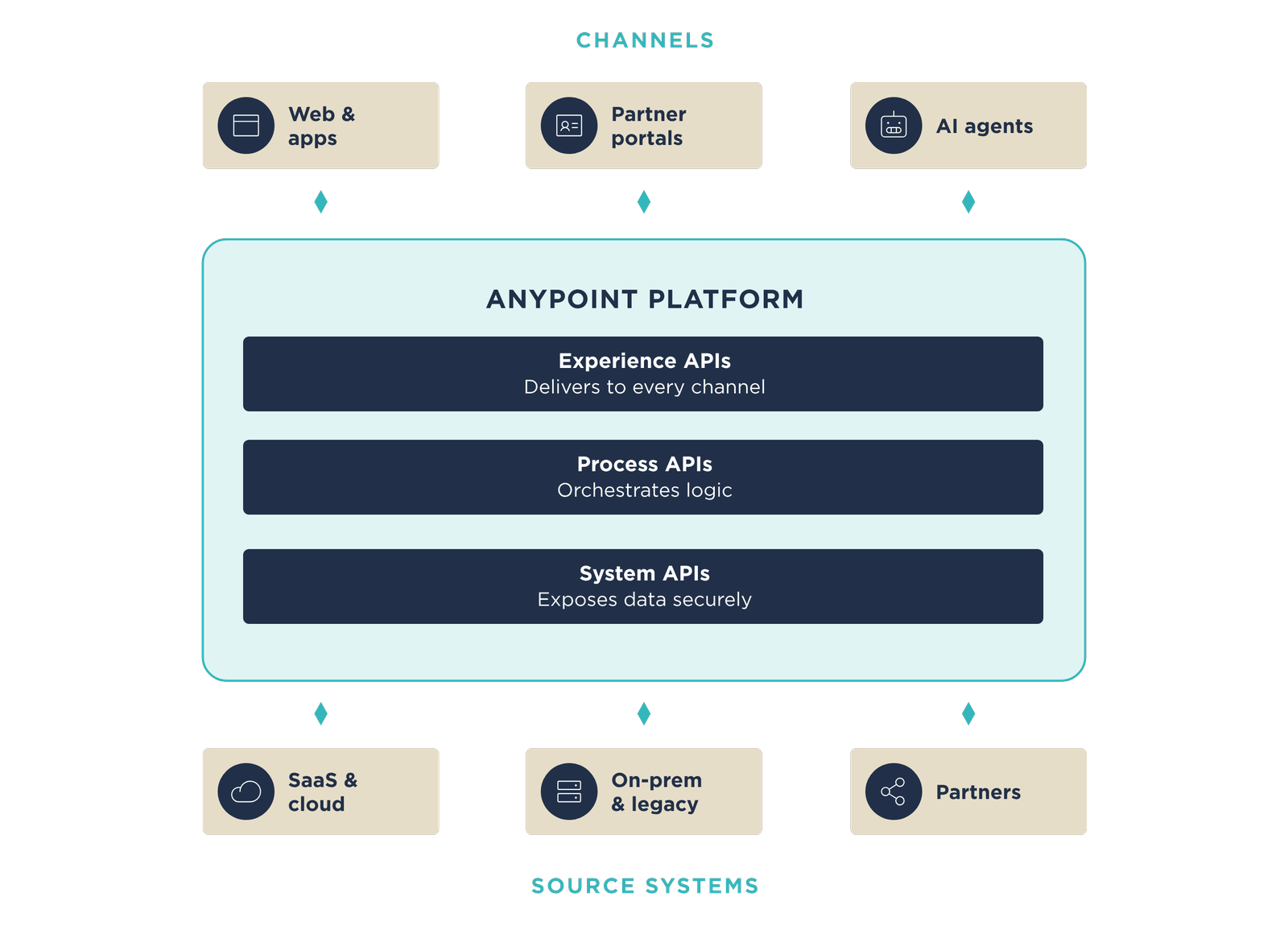
MuleSoft Anypoint Platform provides a common, secure integration layer where APIs and integration components can be built once and reused across systems, processes, digital services and teams. This helps organisations develop faster without having to rebuild security, access and integration logic for every new initiative.
A good example is Region Stockholm, where MuleSoft Anypoint forms part of the Swedwise Healthcare Suite — an integration environment that combines modern API-driven integration with established, high-volume EDI flows.
Anypoint Platform also prepares the organisation for AI agents. Existing governed APIs can be made available as tools that agents can use through standards such as MCP and A2A. With MuleSoft’s agent capabilities, organisations can discover, orchestrate, secure and monitor agents while keeping policy, access and traceability under control.
Some integration jobs are less about exposing reusable APIs and more about ensuring that business-critical information always reaches its destination.
That is the challenge xT supports for organisations such as Region Stockholm and Greencarrier, where large volumes of critical information need to move reliably across complex environments.
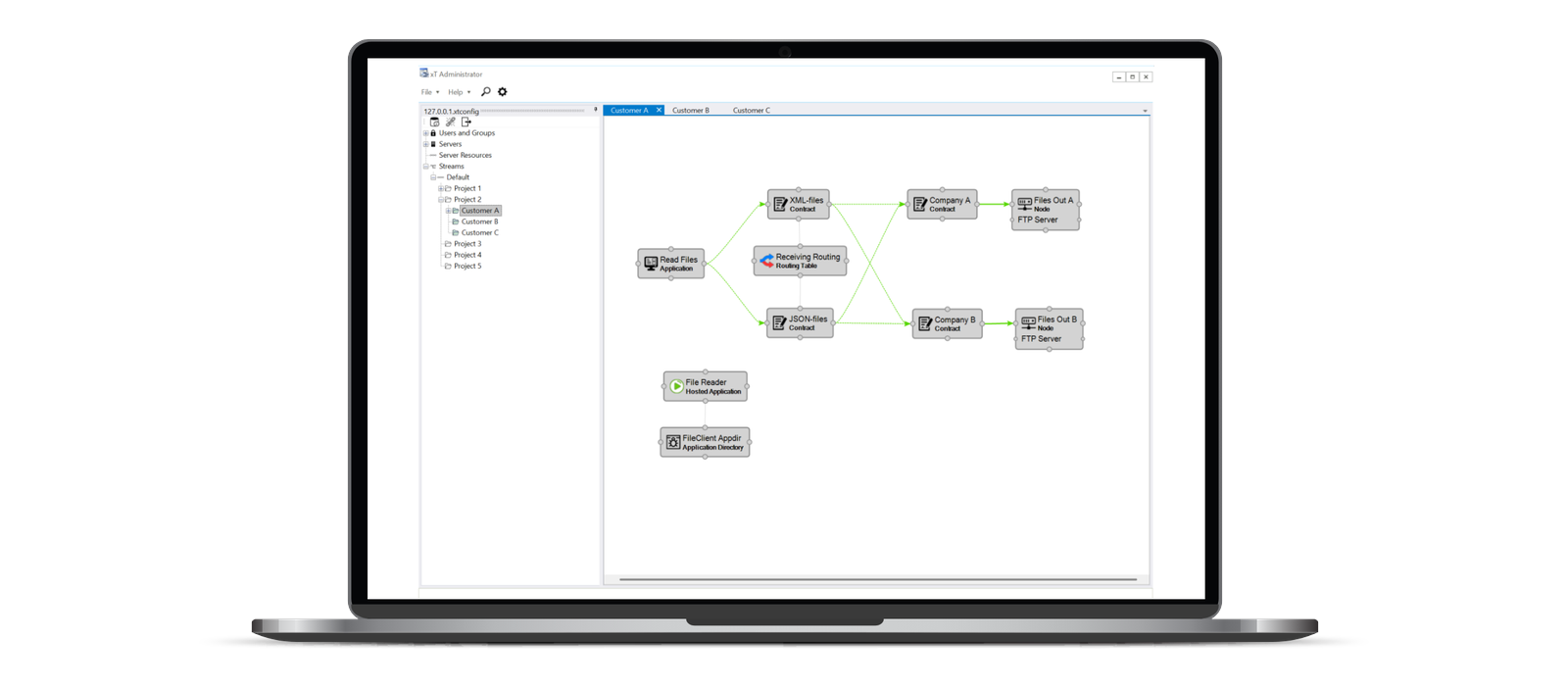
xT brings APIs, SOA and EDI together in one integration platform, providing secure, traceable messaging and visibility across every flow. Developed by WiseTech Global and used within CargoWise, which serves more than 17,000 customers worldwide, xT is built for demanding, high-volume environments.
The benefit is the ability to modernise without losing control — introducing new partners, services and integration patterns while established, business-critical flows continue to run securely and reliably.
Integration complexity often sits in the data itself. Different partners, industries and systems use different standards and formats, which must be mapped, transformed and normalised before the information can flow reliably between systems.
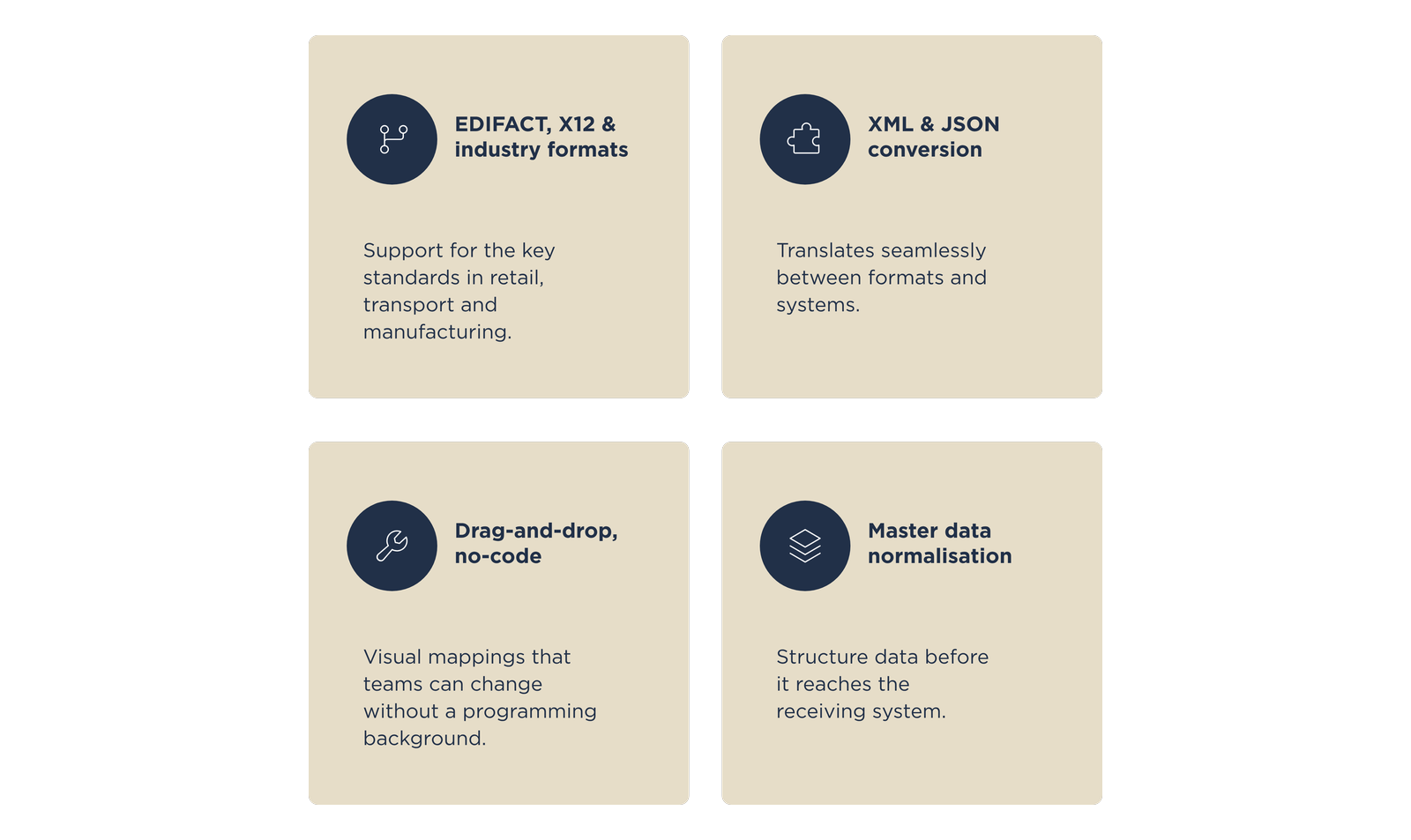
Partners and industries still work with standards such as EDIFACT and X12, alongside XML, JSON and organisation-specific formats. That information often needs to be mapped, transformed and normalised before the receiving system can use it.
Inobiz provides visual data mapping and transformation, helping teams work with complex formats without turning every change into a large development task.
Mappings can cover established industry formats, XML and JSON conversion and master-data normalisation — helping ensure that each receiving system gets clean, correctly structured information.
Building an integration is only part of the job. You also need to know whether it is working.
A business process may cross several applications and integration technologies before it is complete. If an order, invoice or transaction stops somewhere along the way, the important question quickly becomes: Where did it stop — and who needs to act?
Swedwise is an exclusive partner to Nodinite – a tool that provides end-to-end visibility across the integration landscape. IT and the business can follow critical information flows across system boundaries, identify problems earlier and understand where action is required.
This makes integration less of a technical black box. Information flows become visible, searchable and easier to support — even when several different platforms are involved.
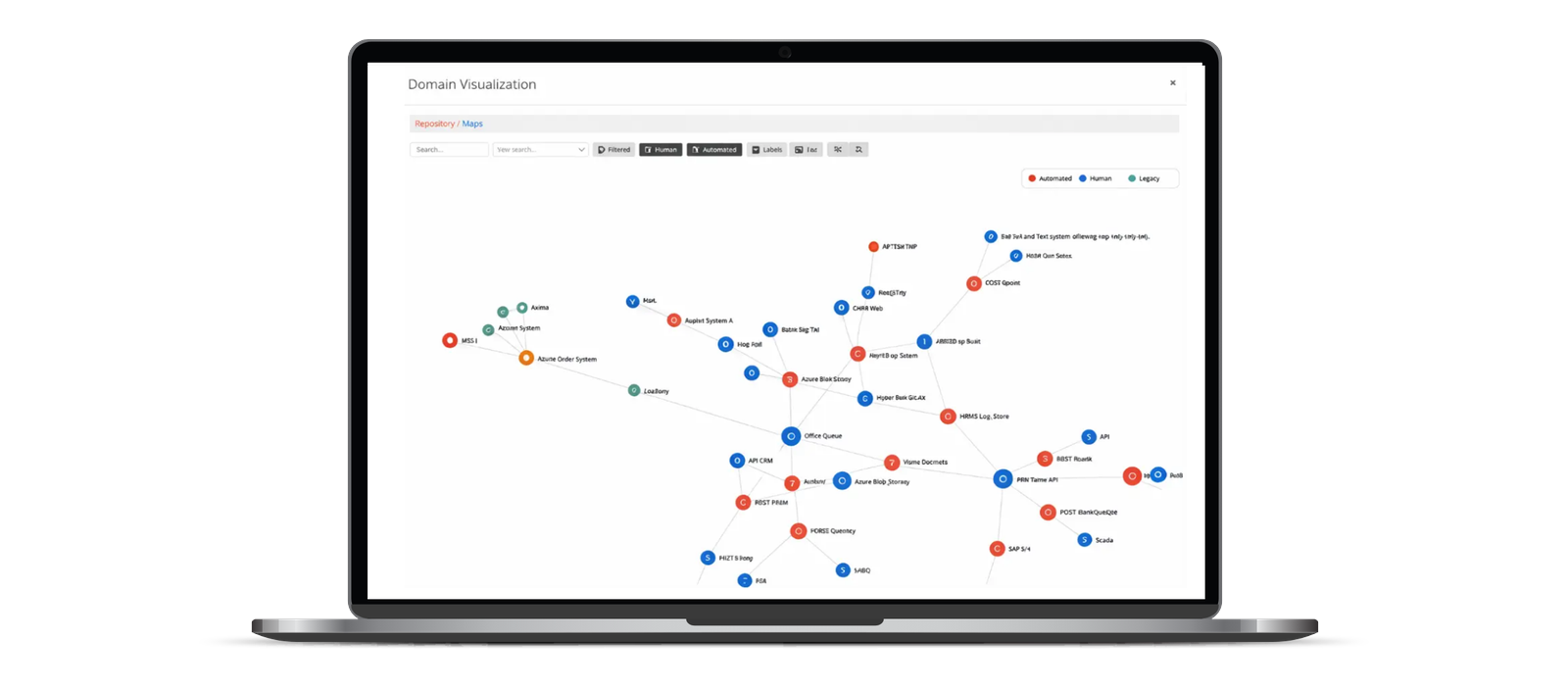
As the number of systems and integrations increases, another challenge appears: understanding the relationships between them.
Which integrations depend on a particular system? What could be affected by a change? Who owns the components involved?
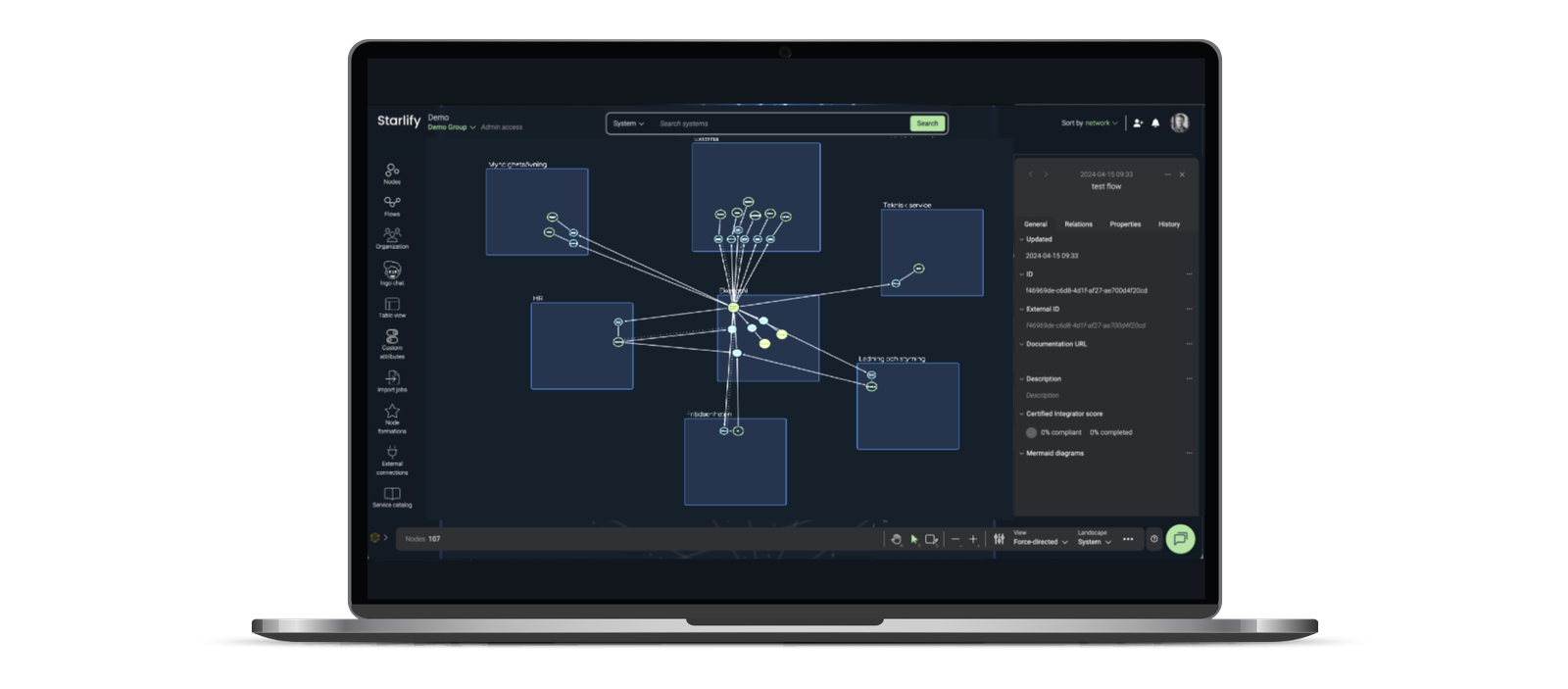
Swedwise partners with Entiros to deliver Starlify creates a living model of systems, integrations, dependencies and ownership. Instead of relying only on architecture documentation that can quickly become outdated, the landscape is represented as structured, machine-readable information.
That makes it possible to understand the potential impact of a change before making it. And because the information can be accessed through APIs and MCP, the same verified landscape context can also be made available to AI agents and other tools.
MuleSoft, xT, Inobiz, Nodinite and Starlify address different parts of the same wider challenge. Connect. Move. Transform. Observe. Understand.
For one organisation, a central integration platform may cover much of what is required. For another, particular business processes may call for specialist capabilities. In more complex environments, several technologies may work together.
The important thing is that the technology supports the architecture and the business need — not the other way around.
That is where Swedwise comes in: helping organisations understand the challenge, choose the appropriate capabilities and make the different pieces work together as a sustainable integration environment.
Start with the integration job: what information needs to move, how critical the flow is, who needs to use it and how the environment needs to change over time. The right architecture may centre on a broad integration platform, specialist capabilities for particular requirements, or a combination of technologies working together.
AI increases the need for governed, reusable and traceable access to systems and data. AI agents also need reliable context about applications, APIs, integrations and dependencies, so a well-structured integration landscape becomes an important foundation for safe and useful AI.
A governed, reusable API layer gives AI agents secure access to the systems and data they need to take action. With MuleSoft Anypoint and Agent Fabric, existing APIs can become agent-ready through standards such as MCP and A2A, while discovery, security, orchestration and monitoring remain under control. This means today’s API investments can support the next phase of agentic AI without rebuilding the integration foundation
Inobiz helps teams visually map and transform formats such as EDIFACT, X12, XML and JSON. This can make partner onboarding, format changes and ongoing maintenance faster and easier to manage.
Nodinite gives visibility across integration flows so teams can see where transactions are moving, where they stop and what needs attention. This helps reduce troubleshooting time, avoid silent failures and keep critical processes running.
Starlify creates a living map of systems, integrations, dependencies and ownership. That gives both teams and AI agents verified context about the environment, helping them understand change impact and make better-informed decisions.
Maybe you are modernising an existing integration landscape. Perhaps business-critical flows need greater reliability, or you need better visibility across several technologies. You may be looking to expose existing systems through APIs, simplify complex data transformation or prepare your architecture for AI.
Tell us what needs to flow, what is standing in the way and what cannot be allowed to fail. We’ll start with the challenge — and help you find the right approach. Book a meeting today.
Build a flexible integration capability around your needs. Meet Swedwise at Nordic APIs Summit.

System Integration
See how Swedwise combines platforms and specialist capabilities to create secure, flexible information flows.
See how CMDB and Discovery create the right foundation for AI and intelligent ITSM.